Who Owns the Past? How Russia Is Destroying Ukrainian Archaeological Heritage and Rewriting Its History


Вибір читачів



From a highway that had erased archaeological sites to a museum complex built over an ancient necropolis In the occupied Crimea, Russia is destroying the archaeological sites and using the past to justify its control over the peninsula. At the same time during the war Ukraine is facing another serious threat to its heritage within its own borders. Ancient burial mounds and settlements are being dug up by looters who sell what they find, while incomplete records, weak enforcement and a market for antiquities make it difficult to protect archaeological sites or trace stolen objects. These problems are not caused by the occupation alone, they expose gaps in Ukraine’s own system of heritage protection.
Bulldozers instead of archaeologists
The Tavrida highway, a 250-kilometre road connecting Kerch with Sevastopol, was one of Russia’s largest infrastructure projects following its occupation of Crimea in 2014. It was intended to improve the peninsula’s transport links with Russia, including for military purposes, and to become a visible symbol of its supposed integration into the Russian state. During the construction of the Tavrida highway alone, at least 90 archaeological monuments have been destroyed.
“As Mussolini allowed a highway to be built across the Roman Forum, Putin believes that he could do something similar. He approaches everything instrumentally and tries to turn it into an element of a special operation.” — Oleksiy Mustafin, a historian.
A Roman-era cemetery in occupied Crimea, discovered during the construction of the Tavrida highway, contained more than 300 burial structures and over 500 burials. The site was excavated in just six months.
Also Crimean Tatar settlements and the cemeteries associated with them were destroyed during the works, while some other sites were spared by changes to the road’s route. A road cannot be built through an archaeological landscape without making choices about what to preserve, what to excavate and what to sacrifice. In Crimea, the choices were made under an occupying administration that had little incentive to prioritize the long-term preservation of Ukraine’s historical record.
The scale of the operation was extraordinary. The speed was even more troubling. Archaeology is a discipline in which relationships between objects, layers in which they are found and structures surrounding them could be as important as the objects themselves.
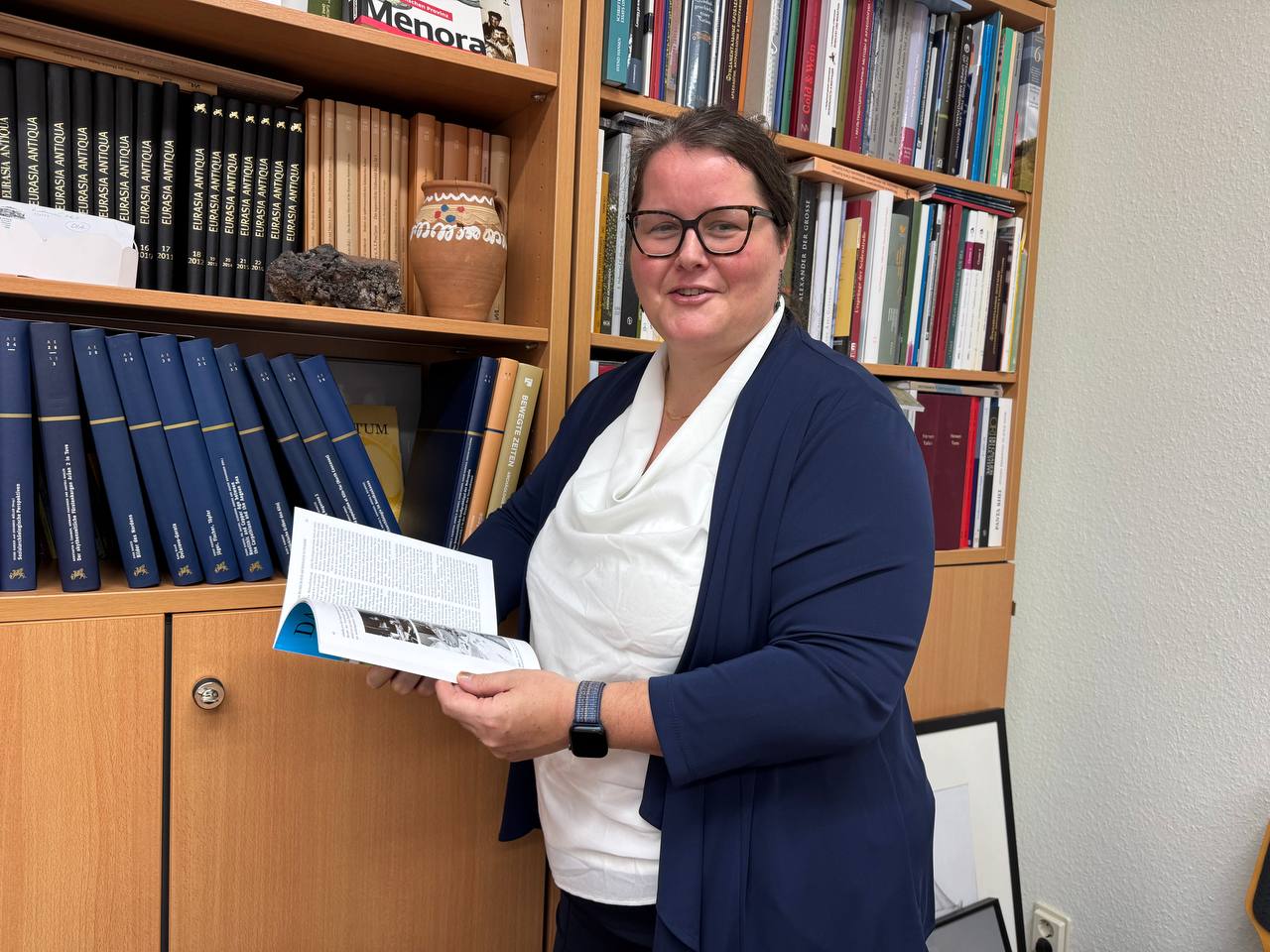
“Even if we retrieve the object, we cannot recreate its context or recover its knowledge of where it was found. All of this has been irretrievably lost. This is the real tragedy.” — Dr. Regina Anna Uhl, a Research Fellow and a Specialist in Prehistoric Archaeology at the Eurasia Department of the German Archaeological Institute in Berlin.
The same conflict between construction and archaeological preservation is visible at Tauric Chersonesus, the ancient Greek city near the present-day Sevastopol and part of the UNESCO World Heritage property. After the occupation, the site became the location of New Chersonesus, a large museum and religious complex built with the involvement of the Russian Ministry of Defence which was opened in 2024.
Around 80,000 square metres were excavated at once, with more than 2,000 archaeological features exposed simultaneously. The area contained some remains of necropolises from several periods, industrial structures and other evidence of the ancient city’s development.
“This is simply a catastrophe. You cannot excavate at this pace. It is the destruction of the cultural layer on an industrial scale, just to finish construction in time for a particular date.” — Serhiy Nemtsev, an archaeologist and serviceman in the Armed Forces of Ukraine.
The area was not an empty plot waiting for a new museum. It was part of a historical landscape whose layers could have required decades of careful research. The complex that now occupies the site covers approximately 144,000 square metres. The ancient city’s archaeological remains have been transformed into the setting for a new attraction designed to convey a particular story about the origins of Russian civilisation.
For Viktor Chabai, the director of the Institute of Archaeology of the National Academy of Sciences of Ukraine, the problem is not that archaeology has taken place, but that excavation has been treated as a way to clear the ground for a construction rather than to preserve an archaeological site.
“From the beginning of its scientific excavation in the nineteenth century, the main idea was to leave as much as possible in place. That is what we call excavation for museum presentation and preservation.” — Viktor Chabai, the director of the Institute of Archaeology of the National Academy of Sciences of Ukraine.

According to the Representative Office of the President of Ukraine in the Autonomous Republic of Crimea in general more than 200 archaeological sites have been damaged or destroyed during infrastructure projects carried out under the Russian occupation. The losses include at least 80 burial mounds, more than 40 settlements and fortified sites, and 20 ground cemeteries.
The consequences reach beyond individual monuments. An archaeologist David Hill, a researcher at the Norwegian Institute for Cultural Heritage Research (NIKU), has been studying the effects of war on heritage and is preparing a book titled Cultural Heritage of War: Lessons from Ukraine. He stresses that much archaeological evidence remains invisible until it is discovered and could be destroyed before anyone knows it exists.
Hill points out to the damage caused when Russian troops dug defensive positions in archaeologically rich areas, including the Chernobyl exclusion zone.
“The area around Chernobyl is extremely rich in archaeology. Russian soldiers set up their camps in the contaminated areas. It was a stupid to dig trenches there, but they did it anyway.” — David Hill, a researcher at the Norwegian Institute for Cultural Heritage Research.
The past as an instrument of empire
The damage in Crimea cannot be explained solely by the pressure of construction. The peninsula has also become a key stage for Russia’s attempt to present its occupation as a restoration of an allegedly natural historical order.
The Russian official narratives repeatedly connect Crimea to the origins of Russian statehood and Orthodox Christianity. Chersonesus occupies a central place in this story because medieval ruler Volodymyr, later associated with the Christianisation of Kyivan Rus, is traditionally linked to his baptism there. In his speech announcing the annexation of Crimea in March 2014, Vladimir Putin described the peninsula and Chersonesus as having sacred significance for Russia, comparing them to the Temple Mount in Jerusalem.
For a historian Oleksiy Mustafin, this is part of a much older effort to claim the prestige of ancient civilizations. Russian rulers have long sought to present themselves as heirs to Rome and classical antiquity, even through some elaborate genealogies designed to connect them to ancient emperors. The point was not necessarily to establish a credible historical relationship, but to borrow the authority and status associated with those civilizations.
The contemporary Russian state has applied the same logic to Crimea. Ancient Greek remains could be used to create a symbolic link between Russia and classical Europe, while the peninsula’s other histories, particularly the history of the Crimean Tatars, become inconvenient to the official narrative.
Mustafin argues that the Russian imperial tradition has repeatedly sought to portray the rulers of Moscow as heirs to the ancient world. The connection has been used to suggest that Russia possesses a historical depth and civilizational status predating the modern state.
“Russian rulers, going back to the tsars, tried to make themselves heirs to Rome and to antiquity in general. They even told stories in which the rulers of Moscow were not merely descendants of Rurik, but Rurik himself was connected to a relative of Emperor Augustus. Antiquity was prestigious, and claiming it gave rulers some prestige.” — Oleksiy Mustafin, a historian.
In Crimea, these claims have a specifically colonial dimension. They are used not just to build the national identity inside Russia, but to undermine historical legitimacy of other peoples on the occupied peninsula.
“In the Crimean context, this made it possible to push history out of the people living there at the moment of the annexation. It allowed Russia to portray the Crimean Tatars as newcomers who had supposedly taken the peninsula from someone else, and Russia as the power that was merely taking back what had once belonged to it.” — Oleksiy Mustafin, historian.

A Polish historian a Dr Jędrzej Piekara sees Crimea as a meeting point for three narratives of legitimacy: religious, imperial and military. Each draws on a different historical period, but all could be mobilized to support the same political conclusion.
“For Russia, Crimea functions as a place where religious, imperial and military forms of legitimacy meet. Chersonesus is connected to the baptism of Volodymyr. The eighteenth-century annexation of the peninsula supplies the imperial layer. And the Crimean War and the Soviet narrative of the Second World War provide the military one. These separate histories are assembled into a single story of Russia’s supposedly rightful presence.” — Dr Jędrzej Piekara, a historian.
The historical periods invoked by this narrative are separated by centuries and belong to very different political communities. The ancient Greek settlements of the Black Sea were not Russian. The Christianisation of Kyivan Rus predates the emergence of the modern Russian state. The Crimean Khanate developed its own political and cultural traditions. The Russian Empire annexed Crimea in 1783, and the peninsula became part of the Ukrainian Soviet Socialist Republic in 1954.
To present these layers as one uninterrupted history of Russian possession requires removing the distinctions between them. Piekara argues that this is precisely the function of the narrative: to turn a complicated history into a story of inevitable return.
“This is both propaganda and a long-term strategy for reconstructing identity. Every impressive discovery or new museum gives Russian media an image that appears to confirm the idea of the peninsula’s eternal Russianness. But the scale of the excavations, the number of institutions involved and the systematic transfer of objects to Russian collections are pointing to a something much more enduring than individual propaganda campaigns.” — Dr Jędrzej Piekara, a historian
Piekara notes that, particularly in the first years after the annexation, foreign politicians, journalists and public figures were invited to Crimea. Their visits could be presented as evidence that the Russian administration was accepted internationally. Scientific publications, museum collections and archaeological exhibitions can have a similar effect when they treat occupied territory as though its legal status had changed.
Is every archaeological undertaking in occupied territory necessarily conceived as a propaganda exercise? Svend Hansen, the Executive Director of the Eurasia Department of German Archaeological Institute, cautions against treating all Russian archaeological work as though every excavation were directly guided by a single ideological plan. She argues that the immediate purpose may be control of heritage and its removal from Ukraine, with some political consequences emerging from that process.
“I would say it is not so much a sophisticated ideology as an attempt to control the heritage and take it away from Ukraine - in Crimea, in Donbas or elsewhere. It also serves to delegitimize Ukrainian heritage today.” — Svend Hansen, the Executive Director of the Eurasia Department of German Archaeological Institute.
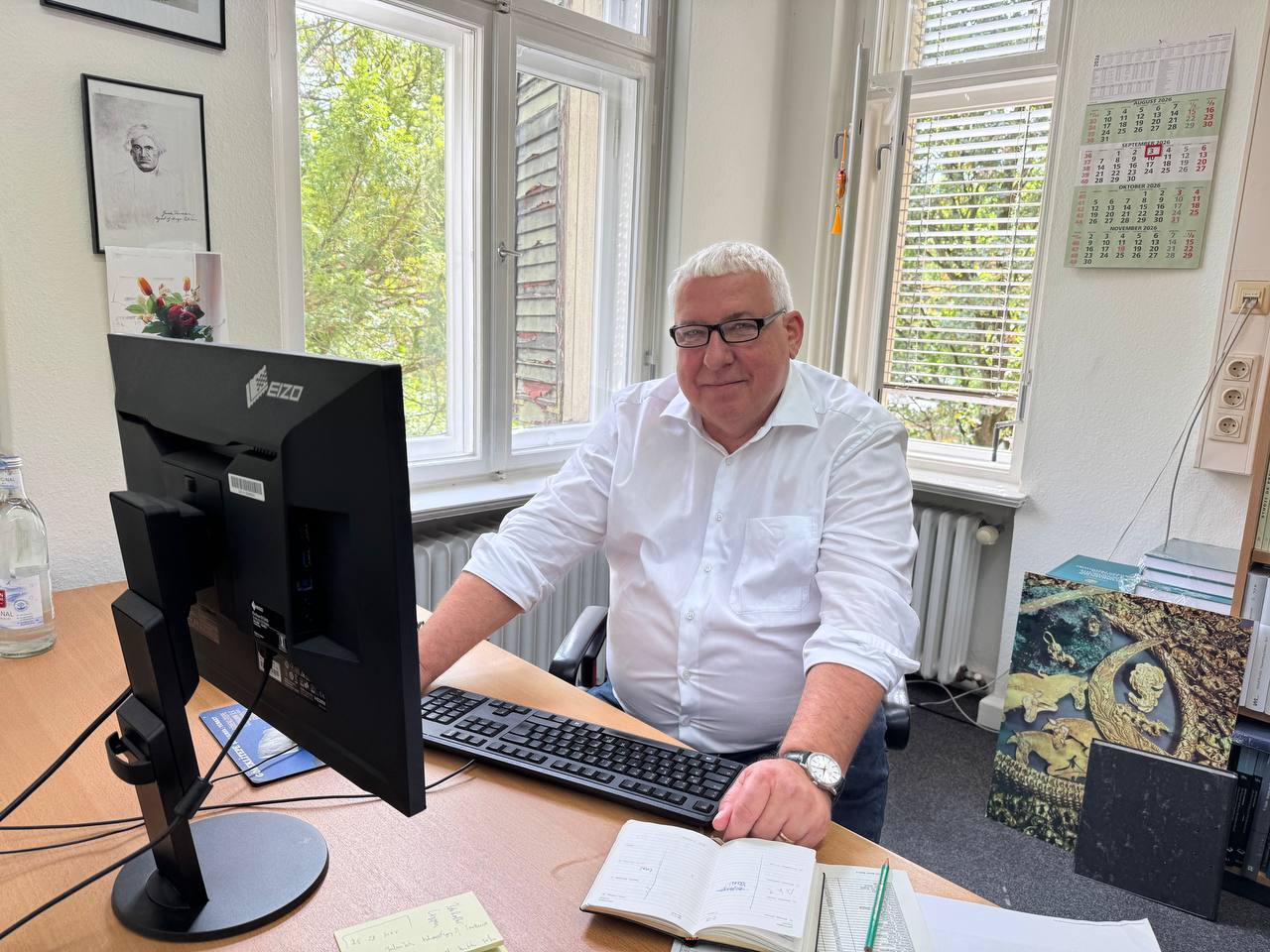
Hansen’s distinction is important. The appropriation of the past does not always require every archaeologist to consciously promote a political doctrine. It can happen through institutional control, selective preservation, transfer of objects, and construction of museums that give one historical interpretation greater visibility than others. For Hansen, a direct comparison may obscure more than it explains. The relevant question is how archaeological evidence is selected and controlled, whose history is marginalized, and who benefits from the resulting narrative.
The physical destruction of heritage and rewriting of its meaning work together. If a monument is altered, its original evidence becomes harder to study. If its history is then presented through a selective official narrative, the interpretation of what remains can also be distorted.
Benjamin Isakhan, Professor of Politics and International Relations at Deakin University in Australia, offers a broader explanation of why archaeology and heritage matter so much to states. National museums, monuments and archaeological sites are often used to represent a shared past, helping governments define who belongs to a nation and how that nation should understand itself.
“Most states focus on particular aspects of the past while ignoring or marginalizing others. The past is always complex and multifaceted, but a national narrative often highlights the parts that support a particular idea of identity and pushes the rest to the side.” — Benjamin Isakhan, Professor of Politics and International Relations at Deakin University.
That process is not unique to Russia. But the situation changes when a state uses historical narratives to legitimize the occupation of another country’s territory, while the work conducted in that territory results in the destruction of sites, the removal of objects or the marginalization of the history of its population.
In Crimea, archaeology is therefore doing two jobs at once. It is being used to support the claim that the peninsula naturally belongs to Russia, while the destruction or selective treatment of archaeological evidence makes it harder for alternative histories to remain visible.
Archaeology under occupation: where is the line?
The conflict between scientific practice and political reality becomes especially difficult when researchers who worked in Crimea before 2014 continue excavating after the Russian occupation.
Alexander Butyagin, an archaeologist associated with the State Hermitage Museum in St Petersburg, had worked at the ancient site of Myrmekion near Kerch for many years. Following Russia’s occupation of Crimea, he continued conducting excavations under Russian authority, despite the fact that those activities were illegal.
Serhiy Nemtsev, who knew the pre-war archaeological community in Crimea, remembers Butyagin as an educated, liberal-minded intellectual who enjoyed the social life of archaeological expeditions. What changed, Nemtsev argues, was the decision to continue excavating as though the occupation did not change the conditions under which the work was being conducted.
“He was an educated, liberal-minded St Petersburg intellectual, someone who could spend an evening singing with a guitar and talking easily with everyone. Then the occupation came, and he said, in effect, that he had always excavated in Crimea and would continue doing so.” — Serhii Nemtsеv, an archaeologist and serviceman in the Armed Forces of Ukraine.
.In December 2025, a Russian archaeologist Alexander Butyagin was detained in Poland at Ukraine’s request. Ukrainian prosecutors accused him of conducting illegal archaeological excavations and damaging a protected heritage site in occupied Crimea. In March 2026, a court in Warsaw ruled that his extradition to Ukraine was legally admissible. However, within two months, he was released as part of a wider prisoner exchange involving Poland, Belarus, and Russia. The exchange notably secured the release of Polish-Belarusian journalist Andrzej Poczobut from Belarusian custody.
“When he was arrested, it felt like this was just the first sign of things to come. And after that, the Russians will all lose the desire to dig on Ukrainian territory. Now I don’t know, they let him go. Well, on the other hand, spending a couple of months in jail isn’t exactly a better place to be either.” — Viktor Chabai, the director of the Institute of Archaeology of the National Academy of Sciences of Ukraine.

The Butyagin’s case also exposed the unrealistic nature of the idea that science could remain separate from politics. Before 2014, Russian and Ukrainian researchers had collaborated in Crimea through Soviet-era institutions and later through agreements between the independent states. That history helps explain why some researchers regarded the occupation as a political event that should not change their professional activity.
Dr Andrzej Jakubowski, an international-law expert specializing in cultural heritage protection, stresses that an occupying power has specific obligations under international humanitarian law. The 1954 Hague Convention and its 1999 Second Protocol establish safeguards for cultural property during armed conflict, including restrictions on archaeological excavations in occupied territory and unlawful removal of cultural objects.
Article 9 of the Second Protocol requires an occupying power to refrain from archaeological excavations in occupied territory except where they are strictly necessary to safeguard, record or preserve cultural property. The exception is not a general license to continue research as usual. It is intended to protect the site, not to provide an occupying power with unrestricted access to another country’s archaeological heritage.
“The occupying power is responsible for protecting cultural property. Under the Second Protocol to the Hague Convention, it must refrain from archaeological excavations that are not necessary for protection. Without the consent of the authorities of the occupied state, major operations that may alter or destroy heritage cannot simply be undertaken.” — Dr Andrzej Jakubowski, international-law expert specializing in cultural heritage protection.
Jakubowski says a removal of cultural objects from the occupied territory is also prohibited under international law. That makes documentation critical: investigators need to establish not only that a site was damaged, but also what objects were removed, who was involved and where the objects subsequently were taken to.
The problem is that UNESCO cannot enforce the law. It can monitor damage, issue warnings, condemn violations and draw international attention to destruction of cultural property. It does not have a police force, cannot directly prosecute individuals and cannot compel an occupying power to stop construction.
Isakhan agrees that UNESCO’s ability to act is constrained by its role in the international system. But he argues that the organization could do more to connect documentation with institutions that have legal or political tools, including the International Criminal Court and the UN Security Council.
“The problem isn't drawing attention to the issue. The problem is what do you do once you draw attention to it. UNESCO doesn't have a standing military. UNESCO isn't able to prosecute legal cases.” — Benjamin Isakhan, Professor of Politics and International Relations at Deakin University.
The Butyagin case also showed how justice can be displaced by diplomacy. His release during an international exchange meant that he did not face the Ukrainian proceedings that had prompted his detention in Poland.
“I would have preferred that they had brought him to Kyiv. He would have been put on trial. And he would have been exchanged for Ukrainian soldiers; hundreds of soldiers would have returned thanks to him. But it’s still important that the entire international community took notice of this. ” — Stanislav Zadnikov, Senior Research Fellow at the Museum of Archaeology at Karazin Kharkiv National University.
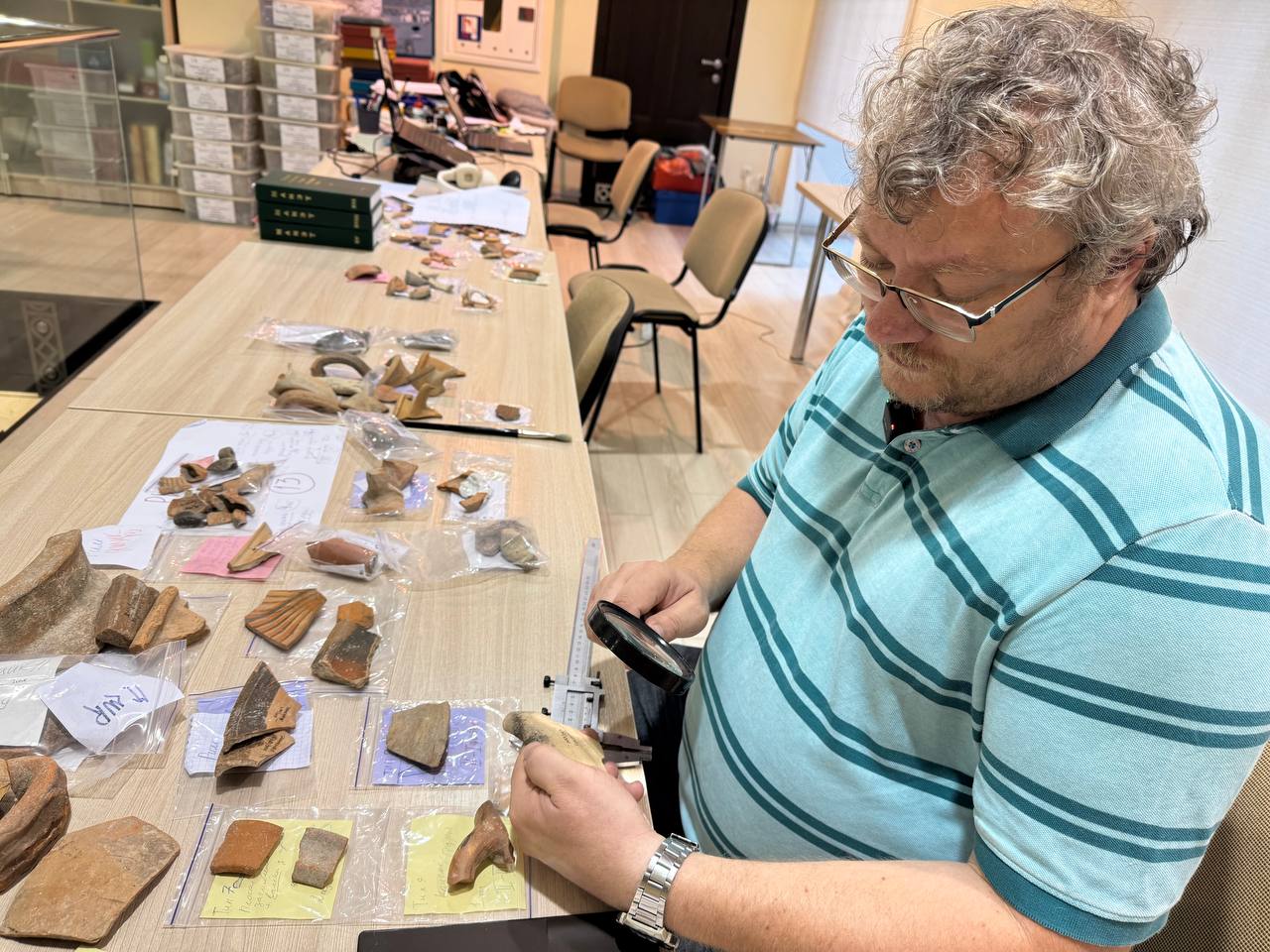
For Chabay, the international archaeological community needs a consistent response when researchers continue excavating on the occupied Ukrainian territory. He points to the precedent of archaeologists who were working in northern Cyprus and were excluded from professional institutions in Europe. If international scientific organizations continue to treat research conducted in occupied territory as ordinary academic activity, they risk helping to normalise the occupation.
Hansen says German institutions stopped cooperating with Russian research institutions shortly after the full-scale invasion. She believes institutions elsewhere in Europe should also ensure that archaeologists involved in illegal excavations or looting cannot continue participating in international conferences and professional collaborations as though nothing had happened.
“It is absolutely illegal. It breaks the international law and the ethical foundations of archaeology. It is not acceptable. In Germany, cooperation with Russian institutions had stopped shortly after the invasion: no joint projects, no exchange of money, no conferences and no joint publications.” — Svend Hansen, the Executive Director of the Eurasia Department of German Archaeological Institute.
The task is not to abandon the scientific exchange that helps archaeology advance. It is to make clear that professional cooperation cannot be used to legitimize illegal excavations or appropriation of cultural heritage during an occupation.
The black market: when an artefact becomes a commodity
Russia’s actions in occupied Crimea are part of a wider problem facing Ukrainian archaeology. Across territory controlled by Ukraine, sites are also being looted by people who treat ancient objects as commodities for sale.
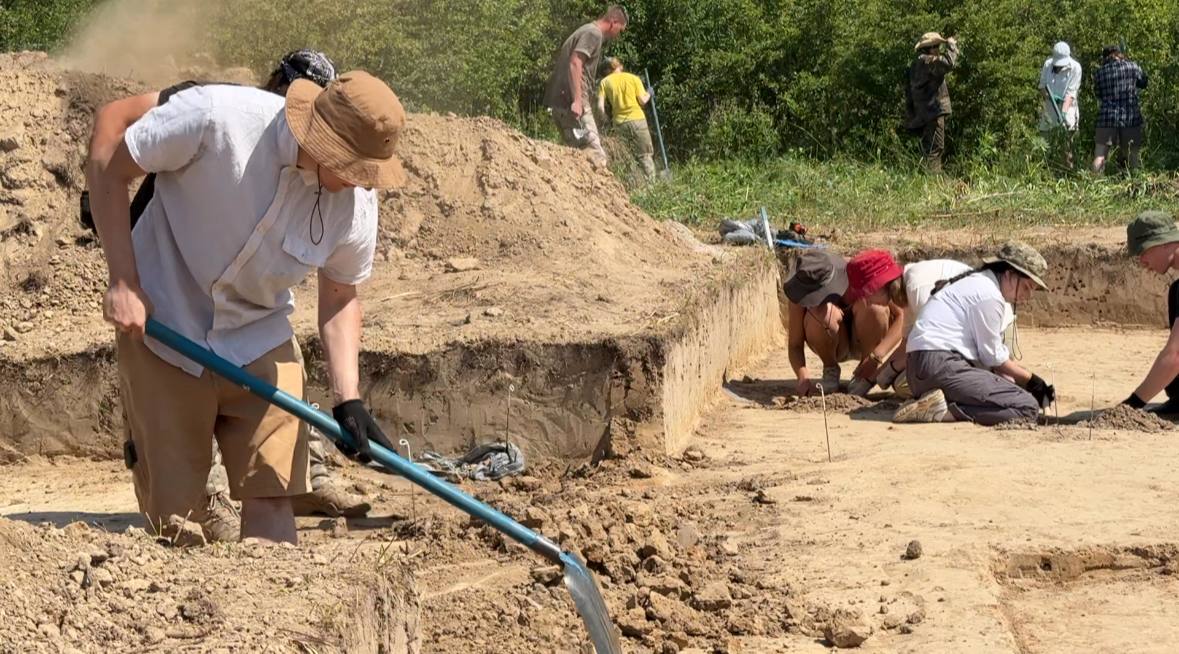
The image of the “black digger” as a solitary enthusiast with a metal detector is misleading. Some operations are organized, use heavy machinery and cover large areas. These are not isolated acts of curiosity. They can destroy entire burial mounds and settlements before specialists have a chance to study them.
In Mykolaiv region, a Scythian burial mound around ten meters high was destroyed using an excavator. Archaeologists say the mound could have contained a burial of exceptional importance. The damage was done not only to any objects that might have been buried there. The mound itself was an archaeological structure whose shape, construction, layers and relationship to surrounding features all carried information.
Another example is Kaburga, an ancient settlement near the Berezan estuary in Mykolaiv region, where an area of approximately 6,000 square metres was illegally excavated. Chabai describes the scale of such operations as a new stage in illegal digging.
“We are no longer talking only about people wandering around with metal detectors. Some of these operations involve excavation areas of 300 to 400 square metres, with material removed in a relatively professional way.” — Viktor Chabai, the director of the Institute of Archaeology of the National Academy of Sciences of Ukraine.
Illegal excavation destroys the context from which archaeological objects derive much of their meaning. A coin taken from an undisturbed burial may help establish chronology, trade connections or burial practices. The same coin, removed from its place and sold individually, may become little more than a collectible item with a price tag.
Kyrylo Mizgin, the head of the Laboratory of Eastern European Archaeology at the University of Warsaw, says a major weakness in Ukraine’s system of heritage protection is the incomplete register of archaeological sites. The law can punish a person for removing an artefact from an archaeological monument, but proving that a site was legally recognized may be difficult when the register is incomplete and its boundaries are not clearly mapped.
“In Ukraine, the law is turned upside down. A person may be convicted for removing of an artefact from an archaeological site, but our cadastre is very limited, and there has never been a comprehensive archaeological survey of the entire country. In many cases, it is simply impossible to prove that a site was officially registered.” — Kyrylo Mizgin, the head of the Laboratory of Eastern European Archaeology at the University of Warsaw.
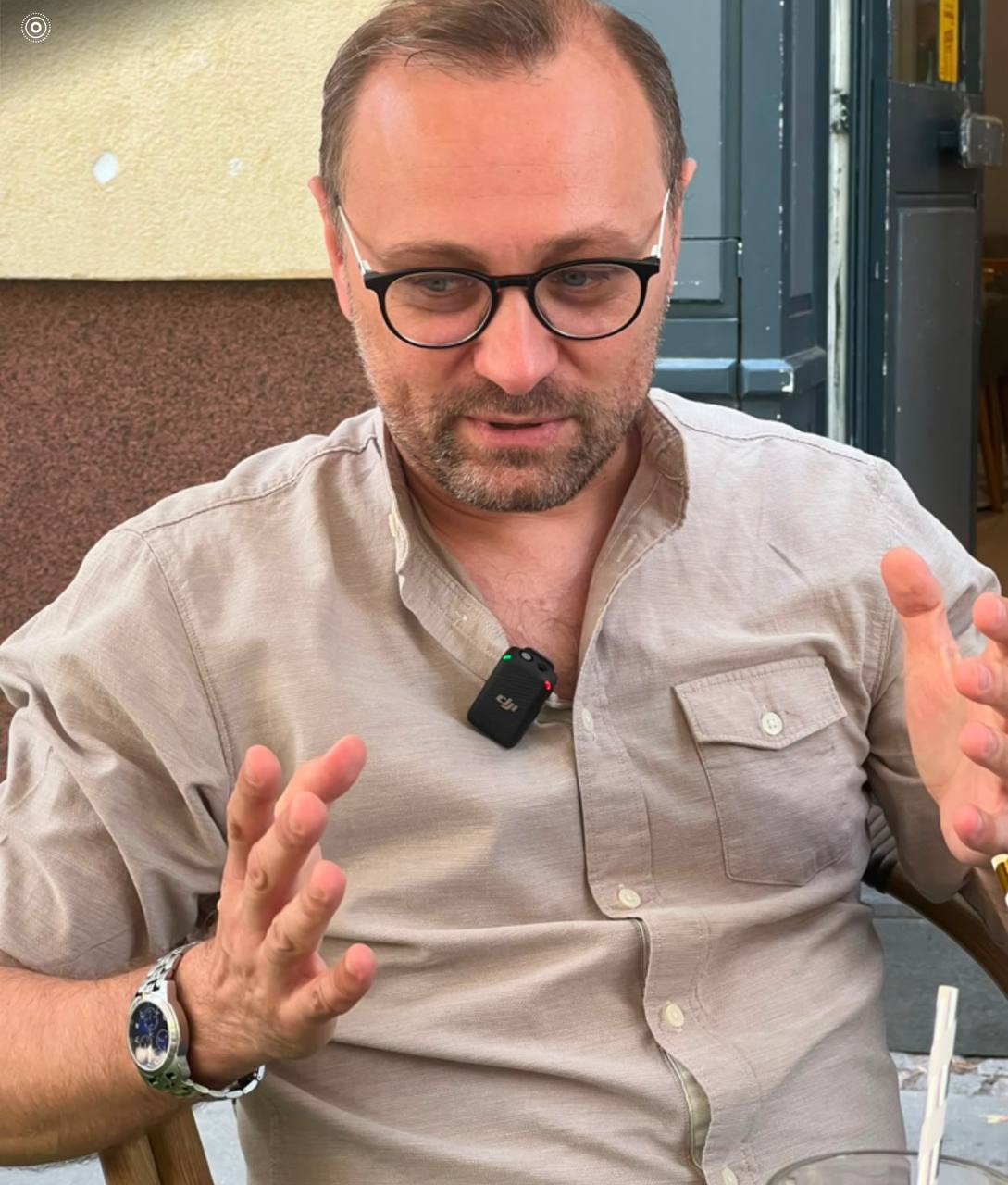
Kyrylo Mizgin, the head of the Laboratory of Eastern European Archaeology at the University of Warsaw.
The online trade in antiquities makes the issue harder to contain. Some objects appear on Ukrainian sales platforms such as Violity and on international marketplaces, including eBay. Often these listings provide no reliable information about where an object was found. Without provenance, archaeologists may not be able to establish whether it came from a protected site, whether it was stolen or how it fits into the history of a particular settlement.
Mizgin describes the scale of the issue in stark terms.
“Violity is a cemetery of lost artefacts. But the fact that it is a cemetery does not mean these objects no longer exist.” — Kyrylo Mizgin, the head of the Laboratory of Eastern European Archaeology at the University of Warsaw.
The objects may still be somewhere in the world, but their relationship to the places where they were found may has been destroyed. A photograph of an artefact can be useful, but it cannot replace the exact location, depth and archaeological layer from which it originated.
The market itself also creates a gap in accountability. Maksym Levada, an archaeologist, notes that the Violity platform presents itself as a space for communication between collectors rather than as some auction houses, even when objects are routinely being offered for sale. This distinction could make it harder to establish responsibility for what is being traded.
“They claim it’s simply a platform provided for people to interact. In reality, sales are taking place. But they claim they bear no responsibility. Moreover, they earn a profit margin. This is a matter for law enforcement and, even more so, for lawmakers. And even if “Violiti” were to disappear from Ukraine tomorrow, the problem wouldn’t go away. Ukrainian artifacts are also being sold on major international platforms with worldwide shipping.” — Maksym Levada, a Ukrainian archaeologist.
Mizgin says that illegal trade should not be treated simply as a matter of individual buyers and sellers.
— “This is not only about truck drivers or someone carrying an object on a bus. It can involve diplomatic channels. This is smuggling.” — Kyrylo Mizgin, the head of the Laboratory of Eastern European Archaeology at the University of Warsaw.
The wider European market is part of the problem. Interpol estimate that illegal trade in archaeological artefacts in Europe exceeded one billion euros, while noting that he did not have an updated figure for 2024. The number should be treated as an estimate rather than a definitive current total, but it illustrates some economic incentives that could support organized looting.
The scale of the trade means that enforcement at the place of excavation is not enough.Germany offers one example of how a country can regulate collecting and sale of archaeological objects, although its system cannot simply be transferred to Ukraine without accounting for differences in the law, resources and scale of the territory.
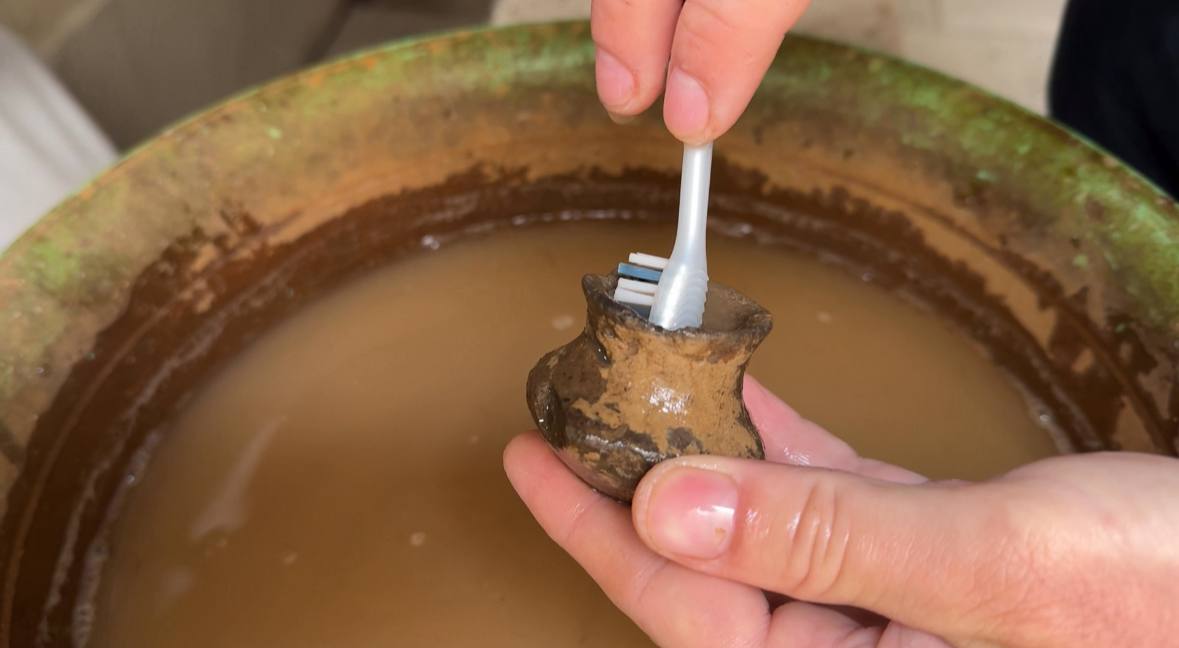
Dr. Regina Uhl, Researcher and an expert in prehistory and archaeological heritage of the Black Sea region says European market also has responsibilities: sellers must establish legal status of objects, and artefacts belonging to Ukrainian heritage cannot be lawfully for sale.
“It’s a network. People need to become aware of this, but I doubt that anybody really knows about the ICOM Red List. I think these are also measures to educate people about the issue. The moment you, as an archaeologist, provide an expert assessment of an object, you will become part of this network. These are things we should simply refrain from.” — Dr. Regina Anna Ulf, a Research Fellow and Specialist in Prehistoric Archaeology at the Eurasia Department of the German Archaeological Institute in Berlin.
Regina Ulf stresses that combating illegal archaeology requires not only stopping individual looters but also disrupting those networks that transport archaeological finds across the borders, sell them through auction houses and falsify documents to conceal their origins.
War creates another dilemma: the mound as a military position
Not every archaeological site damaged during the war is destroyed for construction or looted for sale. Burial mounds and other elevated features may be used as military positions because they offer height, cover or a view across the surrounding area. On the left bank of the Kherson region satellite images show earthworks associated with fortifications on more than 300 burial mounds. When trenches and bunkers are dug into a kurgan, they may destroy the mound’s internal structure and stratigraphy of the burials inside of it. Any subsequent excavation will have less information to work with.
The legal and ethical questions are different from those surrounding illegal excavation. The international humanitarian law recognizes military necessity, and forces cannot always avoid every historical site. It is explicitly stated in both the 1954 Hague Convention and its two protocols.But the principle of necessity does not make every kind of damage is unavoidable.
“Burial mounds are strategic high grounds. And, of course, they will be used. This is the only place where one can find even some semblance of cover; it offers better vantage points for observation and so on. There is a military necessity here.” — Denys Hrechko, an officer in the Humanitarian Affairs and Civilian Protection Department of the General Staff of the Armed Forces of Ukraine.
Denys Hrechko, says the military and archaeologists need practical tools to identify sites and minimise damage wherever possible.
“Our task is to minimize the damage wherever we can and to record the information that servicemen may discover. There has been a successful example in which a soldier with archaeological expertise helped document an unusual burial found during the construction of a position, and the findings were later published in scientific journals.” — Denys Hrechko, an officer in the Humanitarian Affairs and Civilian Protection Department of the General Staff of the Armed Forces of Ukraine.

enys Hrechko, an officer in the Humanitarian Affairs and Civilian Protection Department of the General Staff of the Armed Forces of Ukraine
One proposed solution is a digital map of archaeological monuments that commanders could consult when planning fortifications. Such a map would not replace military judgment, but it could make it easier to identify archaeological sites before construction starts and avoid unnecessary damage.
Where military necessity leaves no reasonable alternative, it is obligatory to limit an impact and preserve as much evidence as possible. Hrechko points out to some cases where archaeologists have inspected former military positions after the immediate danger have passed, documented what they have found and then helped stabiles the sites preventing their further destruction.
“Near Pereiaslav, Kyiv region, many fortifications were constructed back in 2022 during the Russian offensive. The current situation now allows for this matter to be, so to speak, "closed." Consequently, archaeologists are going out to the sites where fortifications have been built directly atop ancient Rus’ settlements and similar locations to document everything, collect artifacts, and then carry out conservation. This conservation process essentially involves backfilling the trenches, dugouts, and other structures to prevent any further destruction of the cultural layer. ” — Denys Hrechko, an officer in the Humanitarian Affairs and Civilian Protection Department of the General Staff of the Armed Forces of Ukraine.
The same principle applies to the protection of heritage on occupied territory. Military activity could cause damage, but that does not make archaeological evidence disposable. The more complete the record of a site before and after an intervention, the better the chance that investigators could later establish what happened.
What Iraq, Yugoslavia and Mali show about heritage crimes
Ukraine is not the first country to face a systematic destruction or looting of archaeological heritage during war. International responses to earlier conflicts show both possibilities and limits of the existing legal system.
Isakhan has studied the looting of archaeological sites in Iraq after 2003 and in Syria after 2011. In both cases, illegal excavations were carried out on an industrial scale, with organized criminal networks and, in some cases, terrorist networks extracting objects from archaeological sites for sale.
The looting of Baghdad’s Iraq Museum after the fall of Saddam Hussein became one of the most visible examples. Isakhan recalls estimates of roughly 15,000 objects stolen from the museum, with around 3,000 returned in the following years. He notes that those numbers are approximate and should be checked against current inventories before being treated as definitive figures. He also recalls cases in which American soldiers had taken some objects during the Iraq war and returned them years later, after the thefts had been discovered or acknowledged.
The damage caused by looting archaeological sites is even harder to reverse than the theft of objects from museums.
“If something is taken from a museum, it may already be catalogued, so there is a chance of matching it to an inventory. If it is taken directly from an archaeological site, it is often uncatalogued. The site is damaged, the object is removed, and you may never be able to associate that object with the place where it was found.” — Benjamin Isakhan, Professor of Politics and International Relations at Deakin University.
Iraq also illustrates how archaeology can be used to build a national narrative. Isakhan points to Saddam Hussein’s efforts to associate himself with ancient Mesopotamian rulers such as Nebuchadnezzar. The ancient past could be used to represent Iraq as a civilization with a history stretching thousands of years back, predating religious and ethnic divisions of the modern society.
The wars in the former Yugoslavia demonstrated that destruction of heritage could also play a role in criminal proceedings. The International Criminal Tribunal for the former Yugoslavia considered damage to historic and cultural sites as part of its cases. One prominent example was the destruction and damage of historic sites in Dubrovnik’s Old Town during the 1991 siege. In 2005, the Tribunal sentenced Yugoslav People’s Army general Pavle Strugar to eight years in prison for war crimes that included destruction and damage to the UNESCO World Heritage site.
Eventually the International Criminal Court prosecuted the case. And it was the first case ever prosecuted for the war crime of intentionally destroying a heritage during conflict.” — Benjamin Isakhan, Professor of Politics and International Relations at Deakin University
The experience of the Tribunal established that the destruction of cultural heritage could be treated as more than a secondary consequence of war. It could form part of the legal assessment of crimes committed against a population and its cultural identity.
Another important precedent came from Mali. In 2016, the International Criminal Court convicted Ahmad Al Faqi Al Mahdi of the war crime of intentionally directing attacks against historic and religious buildings in Timbuktu. He was sentenced to nine years in prison. The case involved ten monuments and was the first ICC conviction for the war crime of attacking historic and religious buildings.
The United Nations Security Council also adopted Resolution in 2017, condemning the destruction and looting of cultural heritage including by the Islamic State in Iraq and Syria. The resolution followed the destruction of sites and objects such as the Mosul Museum and Palmyra. It was the first Security Council resolution dedicated to the protection of cultural heritage in an armed conflict.
These precedents matter because they establish that the destruction of heritage may have legal consequences. They do not mean that every damaged site will automatically result in a prosecution, or that every stolen object will be recovered. Nor do they resolve the political obstacles that arise when the accused state is a permanent member of the UN Security Council.
Should a country be held liable for a crime against cultural heritage if it is not a party to international treaties?
Another less widely known example is Matara, an archaeological site in southern Eritrea. It preserves traces of the region’s ancient history, including its connections to pre-Aksumite and Aksumite civilizations. Among its most distinctive monuments was a stone stele, approximately 2,500 years old, decorated with a sun above a crescent and bearing an inscription in the ancient Geʽez language. During the Eritrea–Ethiopia war, Ethiopian forces controlled the area around the monument and established a military camp roughly 100 meters away. The blast destroyed part of the monument, including sections that could not simply be put back together.
For years late, in 2004, the Eritrea-Ethiopia Claims Commission held Ethiopia responsible for failing to protect an archaeological site at Matara.
“The commission recognised that the obligation to protect archaeological sites in occupied territory is an obligation under customary international law. So it means that you don't have to be a party to a given treaty because it's already an obligation under general international law.” — Dr Andrzej Jakubowski, an international law expert specializing in cultural heritage protection.
For Ukraine, the international precedents suggest that documentation should be built into the response from the start. That means preserving evidence of destruction, tracking the movement of objects, recording the names and institutional affiliations of the people involved, and ensuring that evidence could be used by prosecutors and courts.
But the law cannot restore everything. A trial may establish responsibility for the destruction of a monument; it cannot reconstruct the archaeological layers that no longer exist. A court may order an object returned; it cannot recreate the missing record of the place where it was found.
A rare success: the return of Crimean artefacts
There is one particularly clear example of the international system working in Ukraine’s favour. It is the return of the collection often called “Scythian gold”.
In 2014, archaeological objects from four Crimean museums were loaned to the Allard Pierson Museum in Amsterdam for the exhibition Crimea: Gold and Secrets of the Black Sea. During the exhibition, Russia occupied Crimea. Both Ukraine and the four museums under Russian control claimed the collection, leaving the Dutch museum to hold the objects while the dispute was resolved.
Almost ten years later, in 2023, the Supreme Court of the Netherlands ruled that the objects should be returned to Ukraine rather than to the four Crimean museums. The remaining objects were transported to Kyiv. In total, 565 artifacts were returned after nearly a decade of legal proceedings. The case succeeded in part because the objects were documented. They had inventories, loan agreements and records connecting them to their original collections. These records made it possible to establish ownership through a long legal process, despite the competing claims made after the occupation.
“Documentation is the most important point for everything that happens after the war. It makes the evidence available to international courts, so we can say, ‘We want to recover one million objects that are now in Russia or elsewhere.’ Documentation is the most important step in all efforts to get these objects back.” - Svend Hansen, the Executive Director of the Eurasia Department of German Archaeological Institute.
Germany also has experience with difficult restitution claims involving objects removed during war. Some archaeological materials taken from German collections during the Second World War are now held in Russian museums. One of the best-known examples is the so-called Treasure of Priam, a collection of gold and other finds excavated at Troy. The objects were hidden in Soviet collections for decades and were shown to German archaeologists only in the early 1990s. But they still haven't managed to pull off the artifact
The Russian law adopted in 1995 treated many cultural objects taken as wartime trophies as Russian property, preventing their return to Germany. The objects are documented, but documentation alone has not been enough to overcome the legal and political barriers to restitution.
The same is true of other historical claims on European museum collections. Restitution of Benin Bronzes to Nigeria and work to return objects stolen from Jewish families during the Nazi period show that claims may be pursued many decades after the original taking. The processes are often slow and contested, but the existence of inventories and provenance research can help establish what was removed and from whom.
For Ukraine, the lesson is that recovery cannot begin only after the war ends. Researchers, museums and prosecutors need to document damage, transfers and missing objects while the evidence is still available.
“I think, is very important once the war is over for recovering. Not only to rebuild but also to recover those objects that have been removed by Russian forces.” — Dr Andrzej Jakubowski, an international-law expert specializing in cultural heritage protection.
Documentation is therefore not just an administrative requirement. It can determine whether an object can ever be returned and whether its story can still be understood.
Nikola Budzinska, Olena Solodovnikova
The production of thisinvestigation is supported by a grant from the IJ4EU fund. The InternationalPress Institute (IPI), the European Journalism Centre (EJC) and any otherpartners in the IJ4EU fund are not responsible for the content published andany use made out of it.